Christendom en slavernij
Museum Catharijneconvent, Utrecht
29 June 2024 – 22 September 2024
Group Exhibition
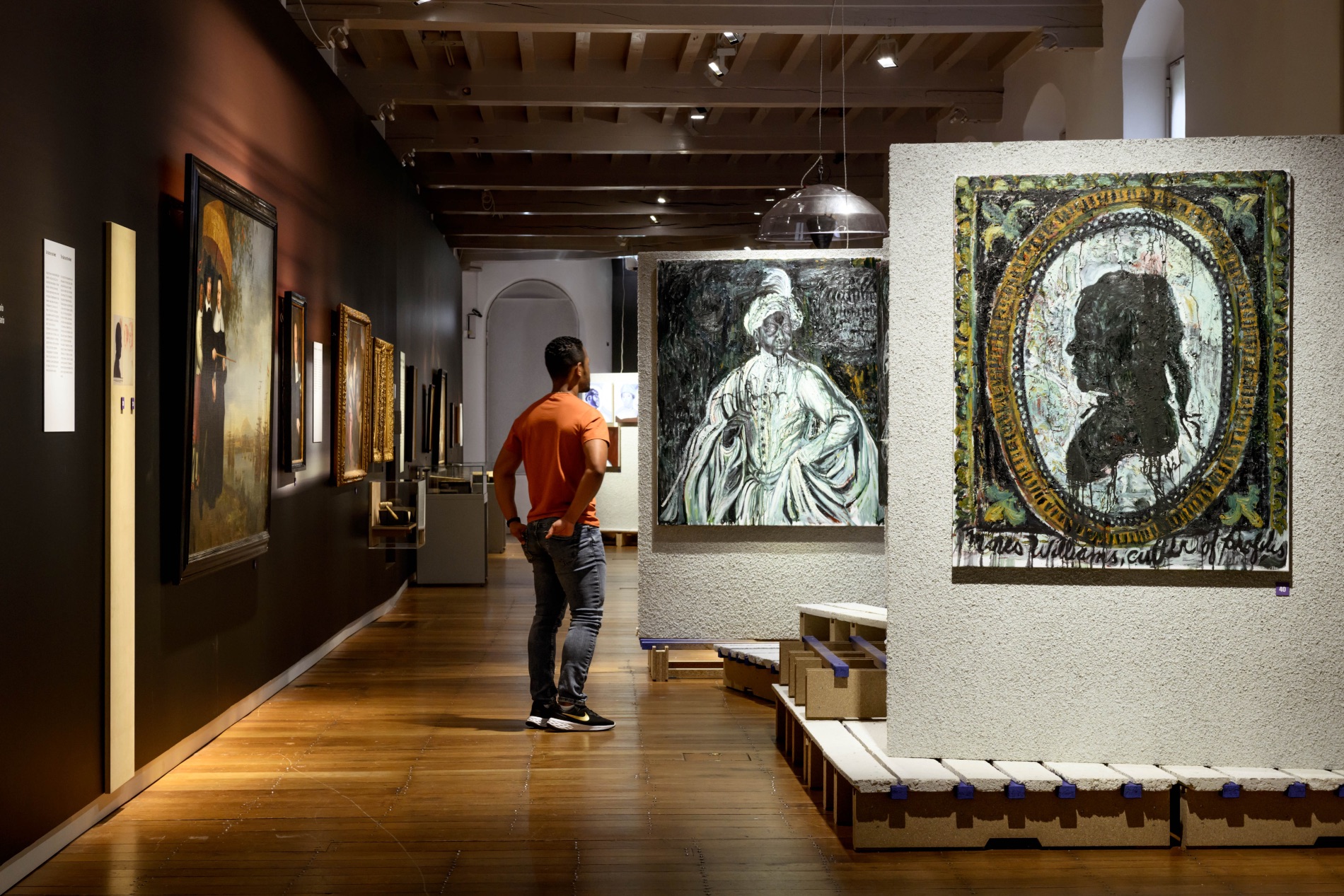
Christianity and Slavery. A Dutch Story.
Through historical sources, underrepresented perspectives, and both old and new art, gain insight into the often unspoken relationship between Christianity and the Dutch slavery past. Christianity had a crucial influence on the thinking about slavery. Both arguments for and against slavery were derived from the Bible, impacting millions of people.
These histories resonate to this day. Never before has such a comprehensive exhibition on this subject been organized on this scale.
Christianity and Slavery sheds new light on a complex and charged history. The exhibition covers all regions where the Netherlands was active in the colonial past. It spans the period from 1596—when the first ship with enslaved people docked in Middelburg—until now.
Dutch people became literally involved in slavery with the Bible in hand. Merchants and preachers sailed together on ships to spread the dual message of commerce and Christianity. Overseas ministers were often provided with a number of enslaved people, and churches benefited from the wealth generated by slavery.
Pros and Cons
Despite the dominant support for slavery, there were always dissenting voices during the Dutch colonial period. What arguments did people use to reconcile the Christian faith with the exploitation of other people, or to oppose it? Why did some enslaved people feel drawn to the Christian faith? How did the interaction between the religions of the enslaved people and the Christianity of the Dutch play out? What role did the churches play in the eventual abolition of slavery? And how is this past viewed today?
Contemporary Art
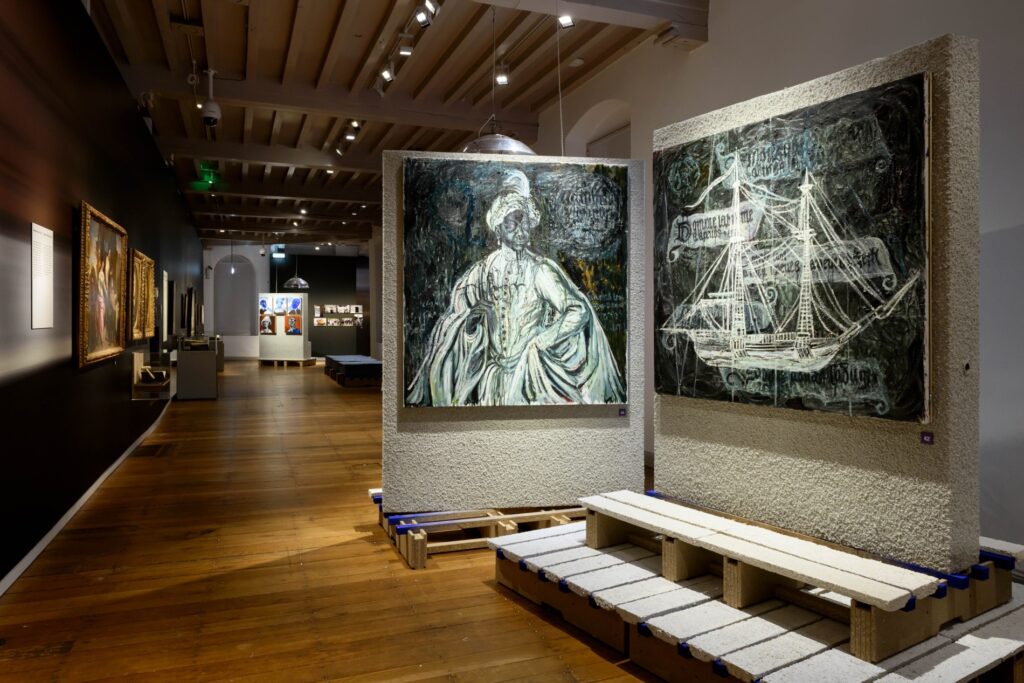
In addition to historical objects, contemporary art plays a significant role in the exhibition. Featuring works by patricia kaersenhout, Jörgen Gario, Rita Maasdamme, Jerrold Saija, Natasja Kensmil, Nelson Carrilho, Kenneth Aidoo, Remy Jungerman, Ruben Cabenda, Femke Dix, and Dion Rosina. Serana Angelista is responsible for the graphic design of the exhibition, and Bureau Namelok creates the spatial design.
In the theatrical video tour accompanying the exhibition, actor Gustav Borreman portrays various perspectives from the past and present.
Source: Museum Catharijneconvent website